Game Design Perspective: Kingdom Come: Deliverance II

Kingdom Come: Deliverance II is an open-world RPG released in 2025 to great acclaim. One aspect so acclaimed was the game's attention to historical detail. I loved this part of the game. The game's landscapes, architecture, dress, and technology were taken from historical examples and period artistic representations. The codex entries would even mention where they took creative liberties, such as moving some man-made ponds back a couple of centuries because they looked pretty. As much as I enjoyed this part of the game, it's not what drew me in. What kept me coming back wasn't the game's sense of history but its sense of pace.
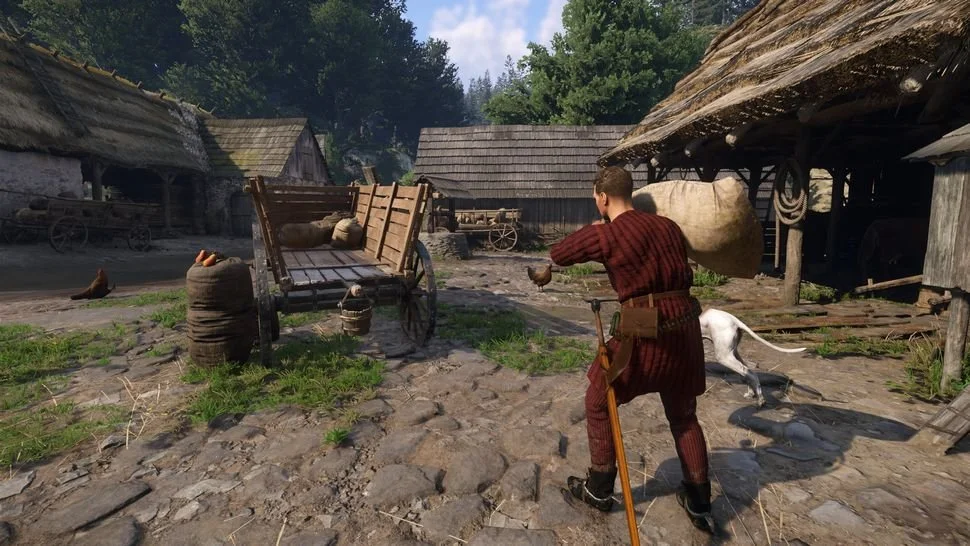
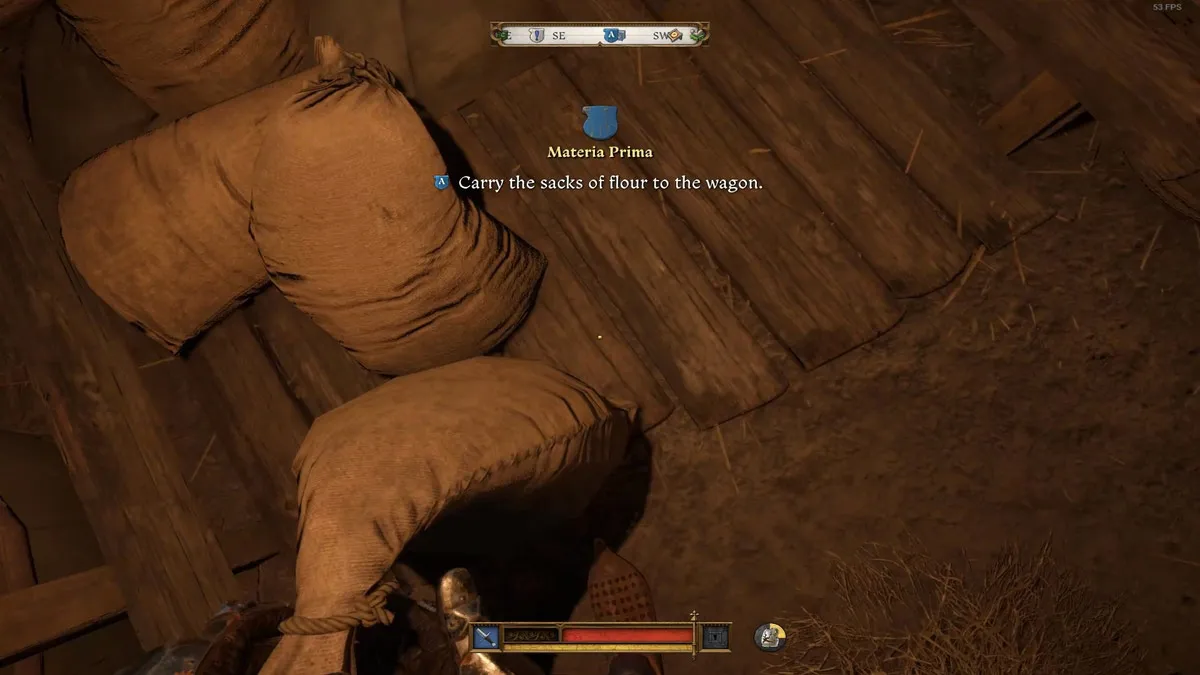
Pace in KCD II is, in one word, deliberate. It is unhurried in getting to where it wants to go. Tutorials are still given out hours after the game starts. (Good thing, too, with as many systems as this game has.) The game's power curve is gradual, dependent on equipment even more than on experience and levels. Most of all, the game's pace is expressed through the small actions of foraging and crafting. This slow and somewhat plodding pace even helps reinforce its historical bone fides by distancing the game from the anything-goes magic of high fantasy. However you'd like to define high fantasy, it's not hauling sacks of flour.
Here's a game design question: how long should it take to pick a flower? In KCD II, Henry kneels down to collect flowers with a short but unskippable animation. In Skyrim, it takes no longer than the press of a button. Red Dead Redemption 2 takes it to the opposite extreme, featuring lengthier cutscenes with every snake skinned and carrot plucked. In the abstract, game designers want to keep it as short as possible. Length has a cost - the more friction you add to a system, the fewer players will interact with it (or the less often they will interact with it).
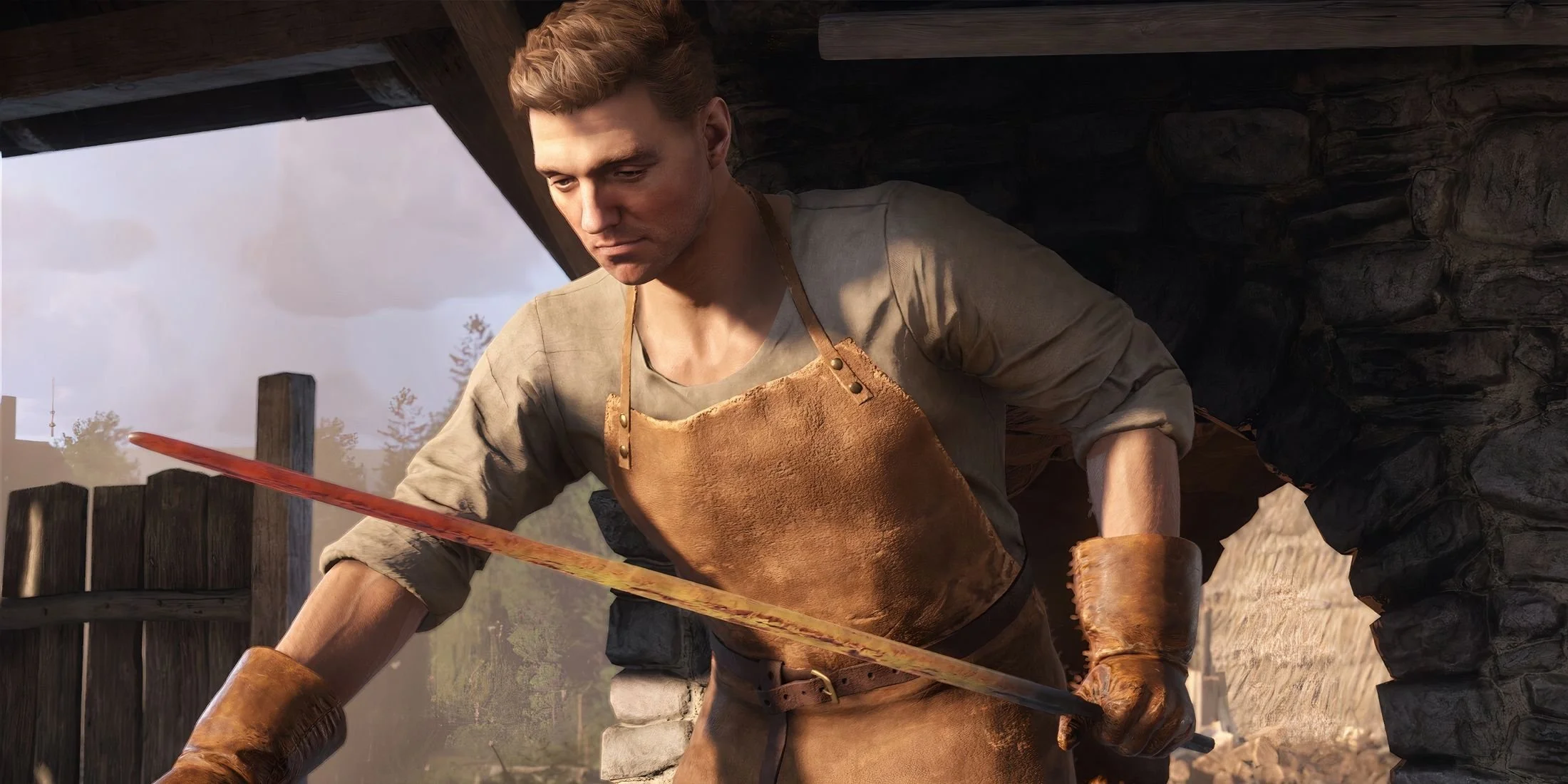
The designers for KCD II choose for flower-picking to take some non-zero amount of time. Why? One easy reason is that it seems more realistic. In some ways, that makes sense. The game's blacksmithing minigame is a good example here. In-game blacksmithing approximates real world blacksmithing by following its motions and its logic. It's the simulationist approach. The trick that KCD II pulls, though, is that it smuggles in another kind of realistic. There's "realistic" as above, as in "how it happens in the real world". The great part of KCD II is that is brings in "realistic" as in "*why* it happened in medieval Bohemia".
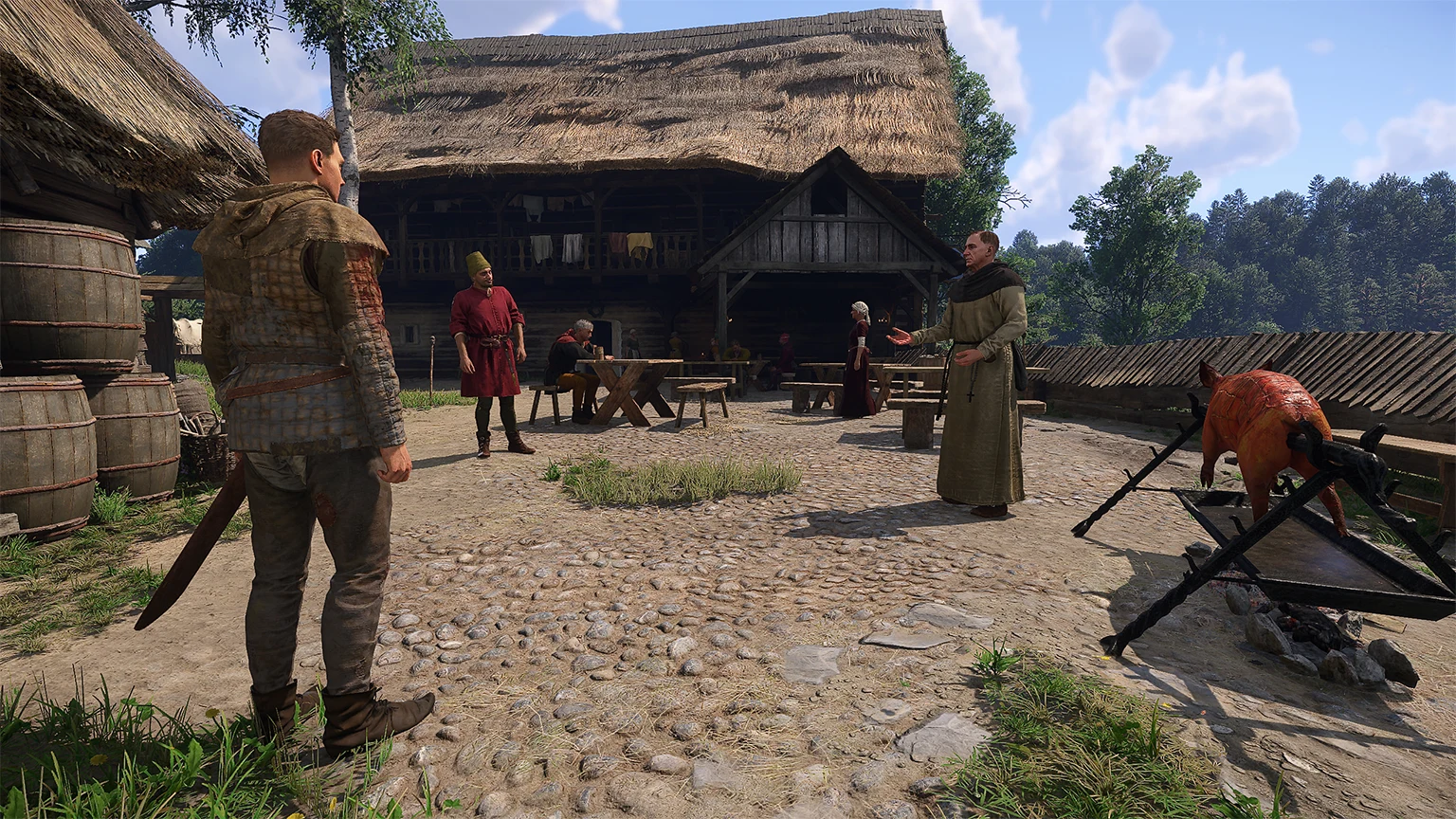
There's a moment in every open world game where the open world opens up. (It seems appropriate to call that moment something German, and Google says that 'opening' is Öffnung.) In the Öffnung of KCD II, you start off barely owning the clothes on your back. You're in debt, you have junk for equipment, and the locals all hate you. (Wonderful moment in the game.) You need to get back on your feet. You need to get to work - just like all the villagers you meet. It's noteworthy that here the main quest line has two branches here. One has you learn theivery and how to steal and the other has you learn blacksmithing. Note that the honest route doesn't involve heroics - say, wiping out a gnoll fortress for a chest full of gold. Instead, you're hammering out swords and horseshoes.
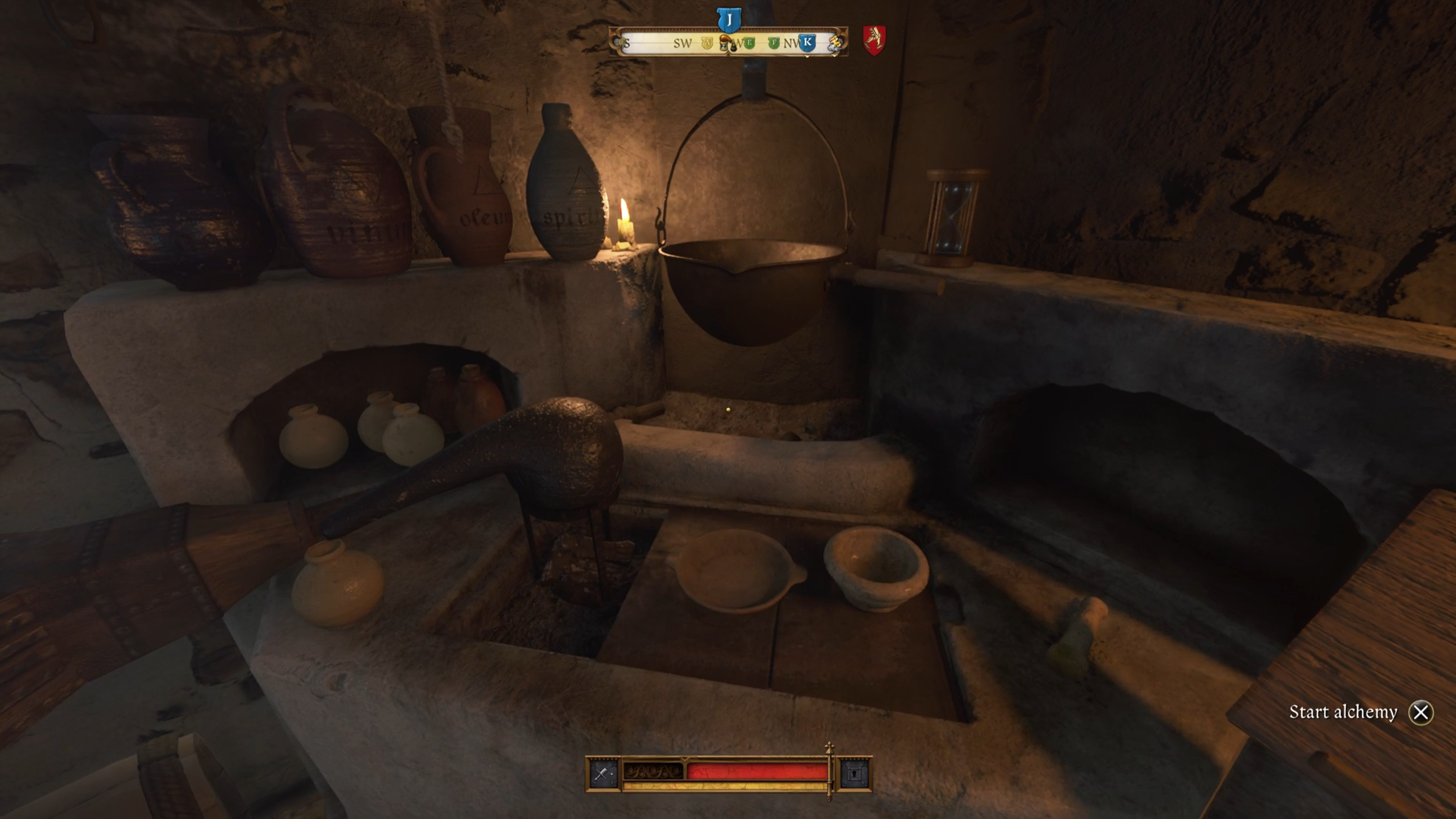
Henry (and the player) works because he needs to. You need to work to be part of society in Bohemia. You take on jobs - hauling sacks or picking up animal corpses - because you need money or a favor or a place to stay. Even the first-class jobs that get minigames (blacksmithing, alchemy) aren't fun minigames on their own. I think they are satisfying and useful, but the developers did not sacrifice realism for fun. (Had the developers chosen to make those activities more abstract, they could have made minigames focused on fun.) Doing this, doing these simulated jobs out of necessity, brings the player closer to the people and society of medieval Bohemia. You get a little bit of the feeling and experience of being a blacksmith, a herbalist, or a knacker. It brings history to life beyond the set dressing of architecture and clothing styles, beyond codices and historical figures. You can't just walk past it. You have to inhabit it.
The unhurried pace of day-to-day living is interrupted by two things. The obvious one is combat, where your fortunes and health can change quickly. The less obvious one is fast travel. You can fast travel to any town or village that you've previously visited. When you do so, you see a quick journey on the map screen. It's a quality-of-life feature for the players (and I certainly used it myself), but it does feel like it goes against goal of embeddedness. It compresses the space, and it feels (and looks) like you are moving around a map rather than moving through a world.
Compare the map-based fast travel to the faster travel you get using a horse. Horses speed up travel considerably and even have a sort of road-based autopilot. Riding way up on a horse, you aren't doing the same sort of flower picking and wandering ramble that you might while walking on the ground. To me, that plays into the game's "Climb (back) to Nobility" theme. Once you can afford a horse, things like flower picking are literally beneath you. If you didn't unlock map-based fast travel until after you got a horse, then the map-based fast travel would feel more in sync with the game's overall design. As it is, it just feels sort of tacked on. I'd be really interested in seeing a game that's designed around not having a fast travel option, sorta like how roguelikes are designed around permadeath.
Quibbles aside, Kingdom Come: Deliverance II remains a great game and great piece of game design. It effectively brings the you into fifteenth-century Bohemia, and that is in part because it forces you to work, slowly and deliberately. Here's to the game that made me craft my own quicksaves.